
Post-Quantum Cryptography Readiness
AQtive Guard discovers hidden cryptographic assets, maps their blast radius, and enforces machine-speed remediation, all from a single deployment.
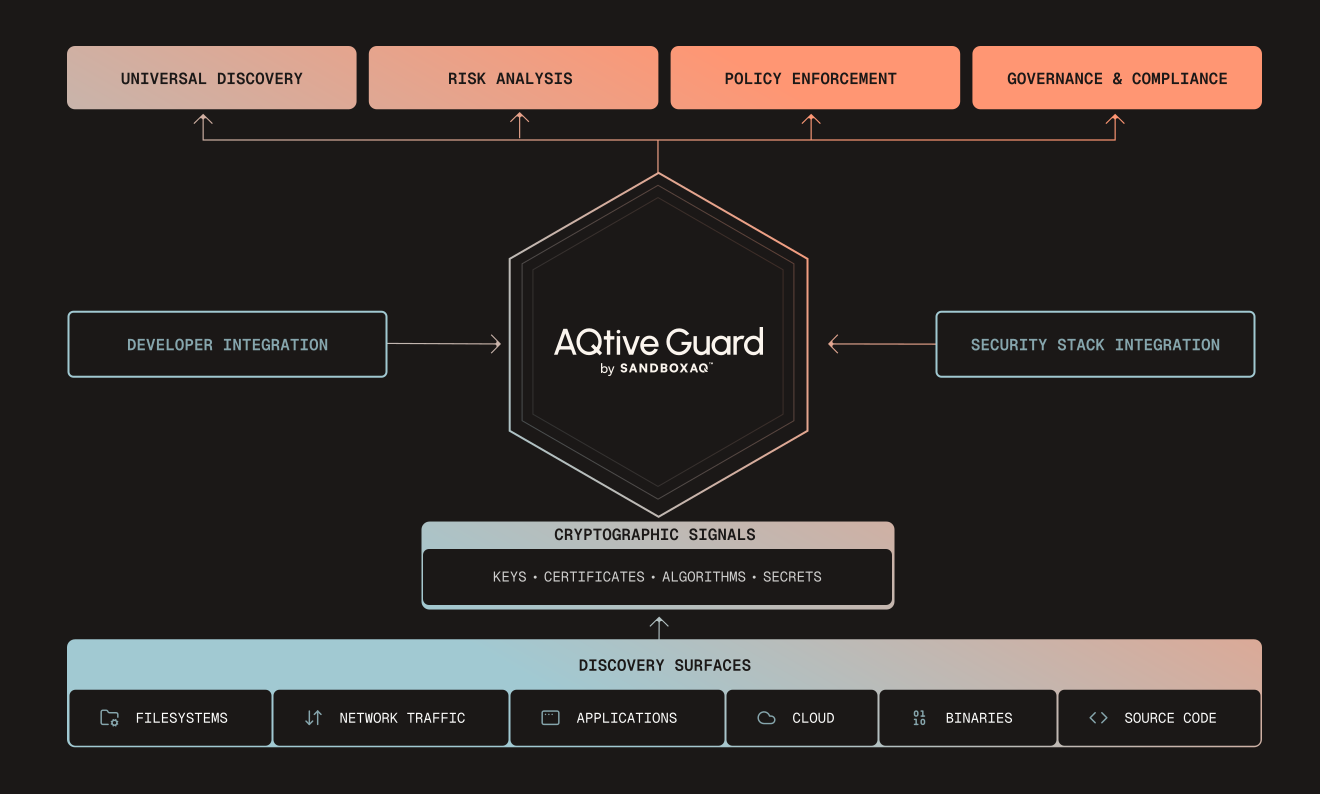
Four stages. One continuous loop.
Every cryptographic asset flows through this lifecycle, automatically and continuously at scale.
See cryptographic assets in use.

Scanning surfaces.
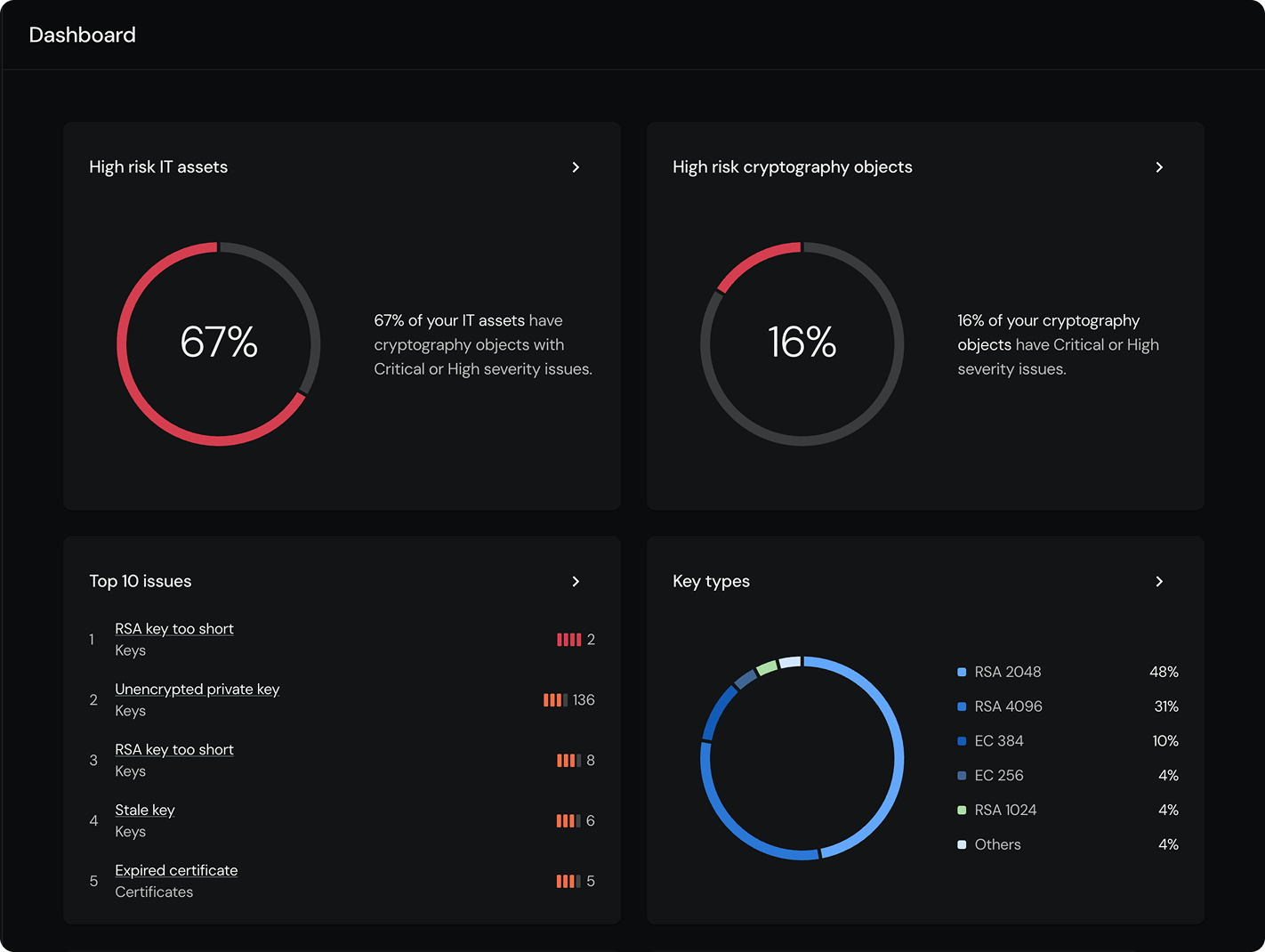
Prioritize what
actually matters.

Risk correlation.
Turn crypto risk into
auditable evidence.

Compliance dashboards.
Enforce policy and fix issues at machine speed.

Inline enforcement.
Using the AQtive Guard
to Cryptographic Security.
Six surfaces. One deployment.
Purpose‑built sensors for each environment feed into a single correlation engine, AQtive Guard gives you complete visibility without forcing you to buy fragmented tools.
Six surfaces. One deployment.






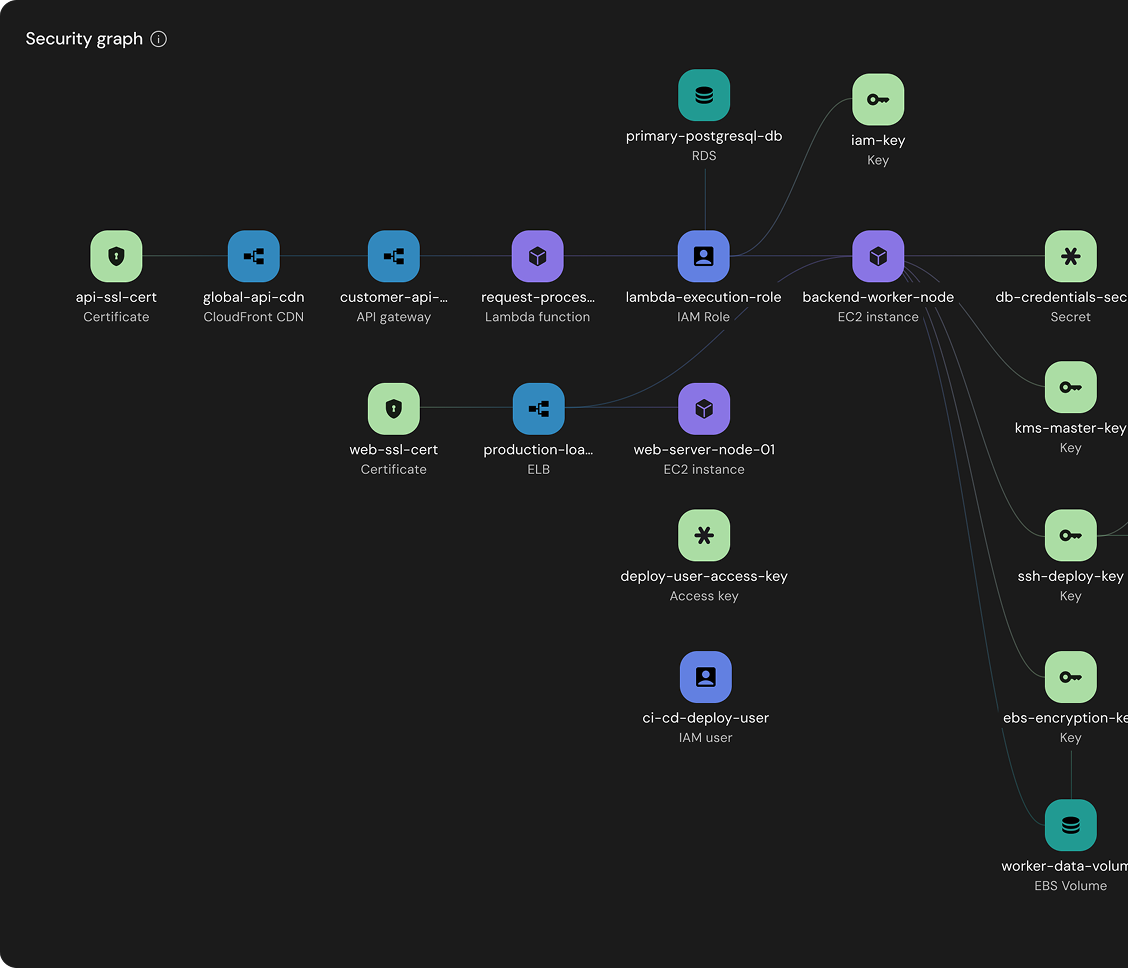
How we turn signals into context.
See the exact blast radius of a vulnerability instantly, without chasing signals across fragmented tools.
What we connect

Where it lives, what it is, and its cryptographic posture.

Who owns it, who uses it, and what data it touches.

Is it exploitable? What is the business criticality? What breaks if we change it?
Runtime guardrails. Automated orchestration.
Stop relying on passive alerts. AQtive Guard bridges the gap between detection and resolution by actively enforcing policies and safely orchestrating cryptographic changes, without adding latency or breaking production.
What gets enforced
Cryptographic Orchestration

Automate the rotation of expired certificates and stale keys without guessing what will break.
Safely replace deprecated algorithms and quantum-vulnerable ciphers using context-aware impact simulation.
Automatically block the deployment of deprecated algorithms (MD5, SHA-1), short keys, and unauthorized ciphers.
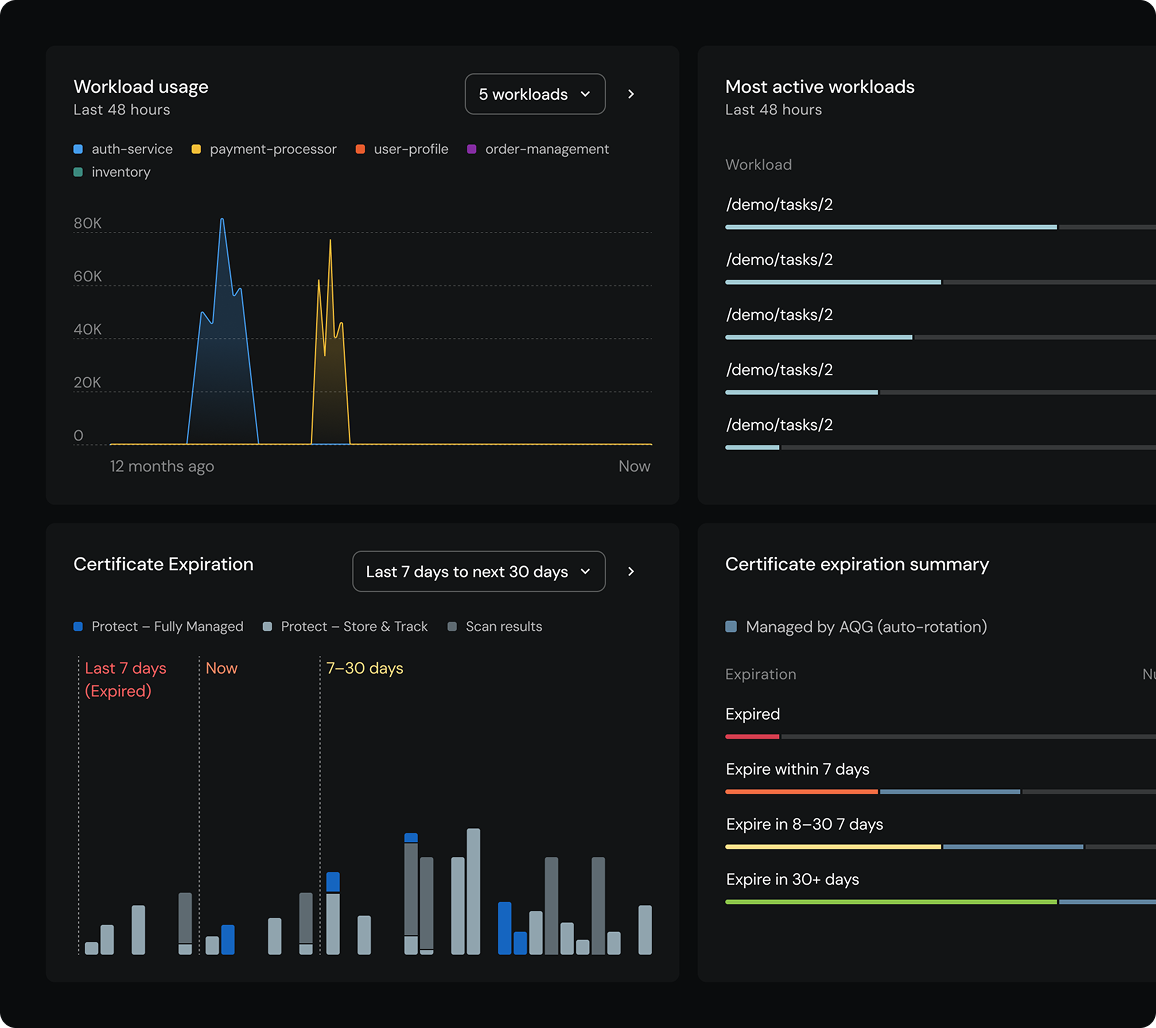
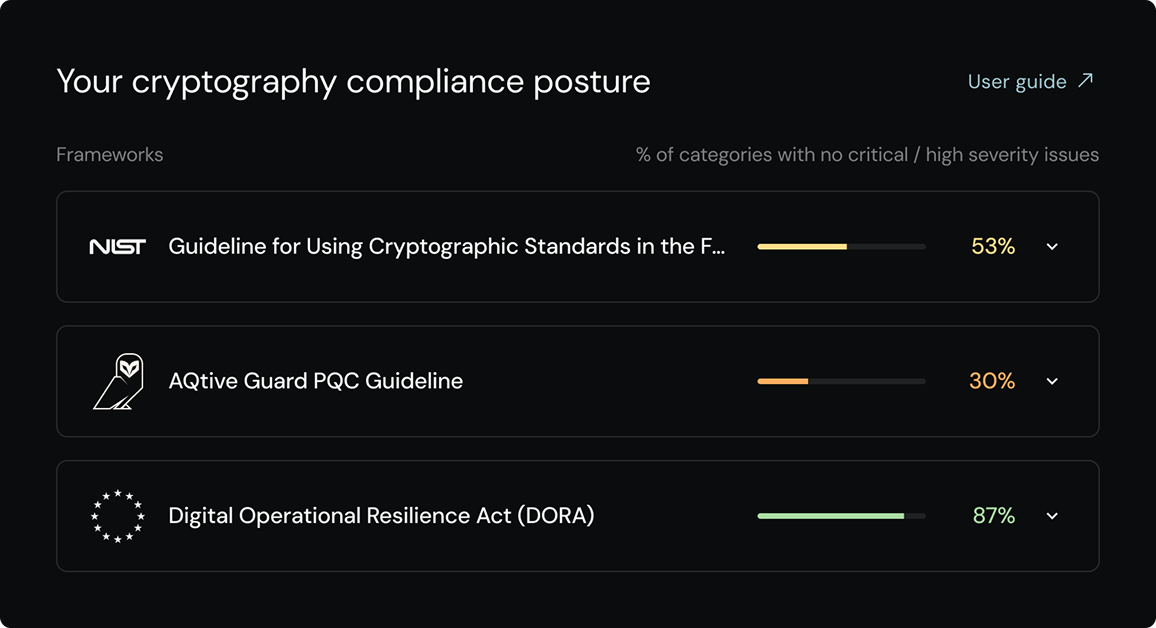
Audit-ready. Always.
Every action generates compliance evidence. Map your posture to the frameworks that matter.
Supported Frameworks

Prepare for PQC.
Complete cryptographic inventory, vulnerability detection, and PQC migration planning, built by the researchers who contributed to the NIST standards.